

Why are Enterprises moving to Small Language Models?

SLMs offer private enterprise three critical advantages over large cloud-based LLMs:
Data Sovereignty & Security: Sensitive data never leaves your infrastructure, insulating your organization from public API leaks and proprietary data poisoning of public models. Compliance with regulations like the EU AI Act and India’s DPDP Act becomes manageable.
Domain Specialization: Through Retrieval-Augmented Generation (RAG) and efficient fine-tuning, a specialized SLM can often outperform a large generalist model on highly specific internal tasks, such as legal contract analysis or medical code prediction.
Operational Efficiency: SLMs require significantly less compute power. Many can run efficiently on CPUs or standard, consumer-grade GPUs, drastically lowering deployment and inference costs while providing the low latency required for real-time applications.
Selection Criteria for the Top 5
To select the leading SLMs for private enterprise in 2026, we have focused on:
Deployability: Proven ability to run locally or in private cloud environments (NVIDIA NIM compatibility is a major plus).
Performance: Strong MMLU (Massive Multitask Language Understanding) and specialized reasoning benchmarks for their size class.
Licensing: Open-weight access under enterprise-friendly licenses (like Apache 2.0 or MIT).
Context Window: The ability to handle large documents is crucial for internal knowledge tools.
The Top 5 Small Language Models for Private Enterprise
1. The Specialist: Phi-3.5 / Phi-4-mini (Microsoft)
Parameter Count: 3.8B (Mini variants)
Context Window: Up to 128K tokens
License: MIT
Microsoft’s Phi series has defined the "tiny but mighty" category. Phi-3.5 and the latest Phi-4-mini variants demonstrate reasoning and multilingual performance that often rivals models twice their size. Trained on high-quality, reasoning-rich synthetic data and human-tuned for safety, the 3.8B-parameter mini variants can fit into roughly 8GB of VRAM (or even less with quantization), making them ideal for standard workstations.
Why it’s a top choice: If your enterprise needs a highly precise instruction-following model to act as a logic-driven agent (e.g., in a RAG system) but has tight memory or compute constraints, Phi-3.5 is the most consistent performer in the sub-5B class.
2. The Powerhouse Balanced: Mistral Nemo 12B (Mistral AI & NVIDIA)
Parameter Count: 12B
Context Window: 128K tokens
License: Apache 2.0
Mistral Nemo, developed in collaboration with NVIDIA, is a masterpiece of efficiency. Sitting at 12B parameters, it provides a crucial balance: complex enough for deep NLP tasks like language translation and real-time dialogue systems, but compact enough to run locally without a massive infrastructure setup. Released under Apache 2.0, it is state-of-the-art for reasoning and coding performance in its class, competing with frontier models while maintaining state-of-the-art accuracy in long-context retrieval (up to 128K tokens).
Why it’s a top choice: For enterprise-grade workloads needing higher capacity while staying efficient, Mistral Nemo 12B is the strongest generalist in the SLM class. Its NVIDIA collaboration ensures optimization for private cloud deployment via NIM.
3. The Sovereign Standard: Llama 3.1 8B (Meta AI)
Parameter Count: 8B
Context Window: 128K tokens
License: Open weights (with restrictions)
Llama continues to be the definitive benchmark series for the open-source community. The 8B parameter variant of Llama 3.1 sit in an incredible sweet spot: powerful enough for question answering and sentiment analysis, while remaining computationally agile. It offers reasonably good performance when organizations need fast results without sacrificed accuracy. It excels in tasks like sentiment analysis and complex question answering.
Why it’s a top choice: Llama 3.1 8B is the un-ignorable foundation. While its custom license has usage restrictions that require legal review, its massive community and unrivaled ecosystem integration make it the fastest path from pilot to production for organizations comfortable with its license terms.
4. The Mobile-First Green Play: Gemma 2 2B / 9B (Google DeepMind)
Parameter Count: 2B & 9B
Context Window: Up to 128K tokens
License: Open weights (with restrictions)
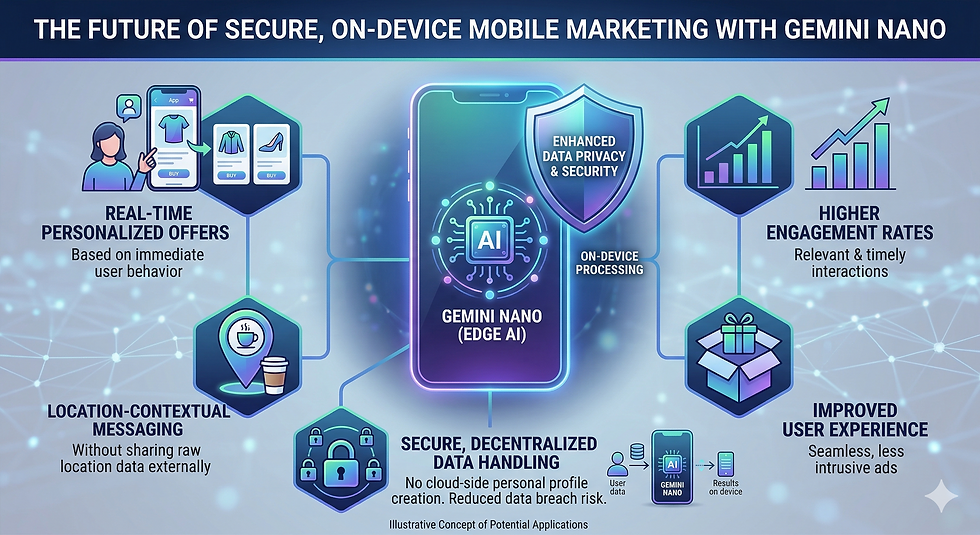
Google’s Gemma 2 series is safe by design. Built on the same research as Gemini, these models focus on on-device, mobile-first performance and responsible AI alignment. Gemma 2 2B offers incredible edge latency (as low as ~32ms TTFT on mobile-class hardware) and reduced power consumption, making it ideal for privacy-preserving, offline AI use cases.
Why it’s a top choice: If your enterprise strategy involves on-device deployment for a global product that cannot afford larger multilingual models, or if your organization prioritizes AI sustainability (it uses only 10–20% of standard energy), the Gemma 2 series provides the highest performance with the lowest possible footprint.
5. The Versatile Multi-Agent: Qwen 2 / Qwen 3.5 (Alibaba)
Parameter Count: 0.5B to 1.5B (Enterprise class)
Context Window: Up to 262K tokens
License: Apache 2.0
Qwen models are highly adaptable. Organizations should focus on its smaller enterprise variants, such as the 1.5B model, which offer quantization-aware training and fast inference. The 0.5B variants are perfect for simple agent workflows, parse, and summarization. Qwen3.5-0.8B even offers multimodal capabilities (text, images, and video) in one compact package, ideal for screenshot Q&A and simple video summarization.
Why it’s a top choice: Qwen is the answer for large-scale multi-agent orchestration. With Apache 2.0 licensing, seamless integration into existing stacks, and modular variants, enterprise agents can use multiple Qwen SLMs in tandem one for triage, one for retrieval, one for final generation creating powerful, autonomous workflows without reliance on cloud services.
Summary: The SLM Comparison Table
Model Class | Developer | Parameter Count | License | Enterprise Strengths | Best Use Case |
Phi-3.5 / Phi-4-mini | Microsoft | 3.8B | MIT | High reasoning, precise instruction-following. | Logic-driven agent in a RAG system. |
Mistral Nemo 12B | Mistral AI & NVIDIA | 12B | Apache 2.0 | Complex generalist, coding, state-of-the-art long context. | Enterprise knowledge tools & chatbots. |
Llama 3.1 8B | Meta AI | 8B | Open weights (with restrictions) | Massive ecosystem, strong community support. | Fast pilot-to-production deployment. |
Gemma 2 2B / 9B | Google DeepMind | 2B, 9B | Open weights (with restrictions) | On-device, mobile-first design, high safety alignment. | Privacy-preserving mobile use cases. |
Qwen 2 / 3.5 | Alibaba | 0.5B, 1.5B | Apache 2.0 | Versatile, multimodal (sub-1B), quantization-aware. | Multi-agent autonomous workflows. |
Conclusion: Marketers are Strategy Orchestrators
Agentic AI does not replace the marketer; it elevates them. By delegating the "doing"—the segmenting, the drafting, the routing marketers can focus on the "being" the vision, the empathy, and the high-level strategy. In 2026, the brands that win are those that let their agents handle the journey so their humans can handle the connection.
Agentic AI elevated the marketer to strategy orchestration. Small Language Models (SLMs) make that orchestration robust, private, and secure. Delegating cognitive overload is how we win back the "Human Hour." If you are ready to secure your data and begin automating outcomes, we encourage you to choose your SLM pilot.
Refer to our posts on social media:


Comments